Architecture 2026
See a whole program built this way.
01
The check payments.py
def charge(order):  # ship it
    try:
        data = post(PAY, order).json()
    except Exception:
        return None  # eh, just retry
    if "status" in data:
        if data["status"] == "approved":
            return data["charge"]["id"]
        if data["status"] == "declined":
            return None  # also retry?
    return None  # who knows

# {"status": "approved", "id": "ch_9"}
# KeyError: 'charge'
Charged twice.
The type payments/model.py
class Approval(BaseModel):
    status: Approved
    charge: ChargeId = Field(alias="id")
class Decline(BaseModel):
    status: Declined
    codes:  DeclineCodes
class Outage(BaseModel):
    error:  StatedError
class Reply(RootModel[
    Approval | Decline | Outage
]):
    """Every answer they have."""

# {"status": "approved", "id": "ch_9"}
Reply.model_validate_json(raw)
# Approval(charge=ChargeId('ch_9'))
Charged once.
Each of those checks exists because a type allows more than your business does.
In most code:
In Type Construction Architecture:
So a program that only builds these types has nothing left to check, and an incident has nothing to be.
Those types are the rules, declared once in their owner’s words, so a new hire, the product owner and you next year read what runs.
To an agent, those types are a world model of your business, so the same declarations that tell it what exists stop it from building anything else.
02
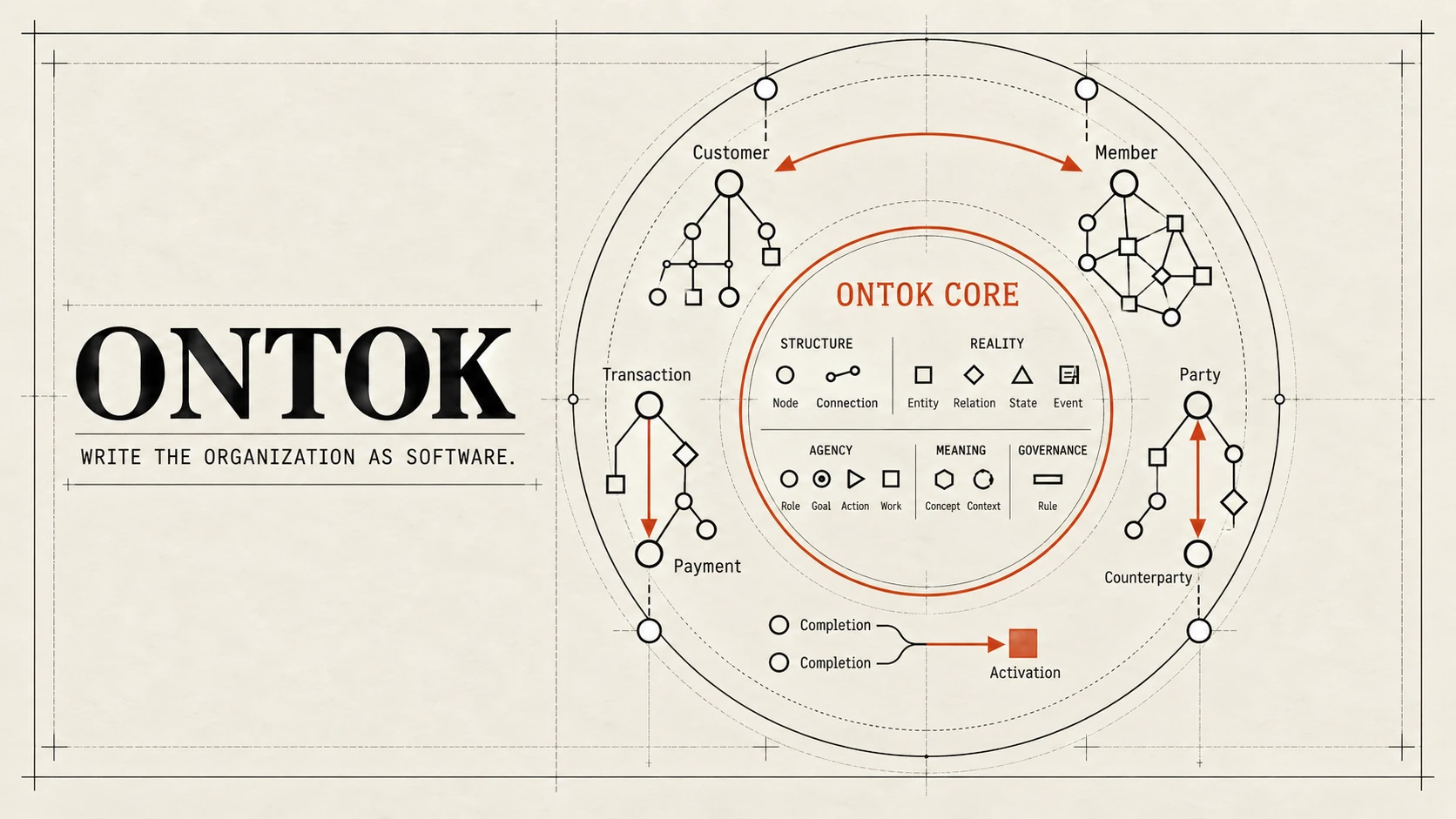
ONTOK, built with Type Construction Architecture, writes what your organization is once, as running code every system and agent works from.
The CRM, billing and support stop keeping separate customers for someone to reconcile by hand. The definition belongs to the organization, never to a vendor.
A fact enters only once what it rests on is proven, so what your people know becomes what every system understands.
03
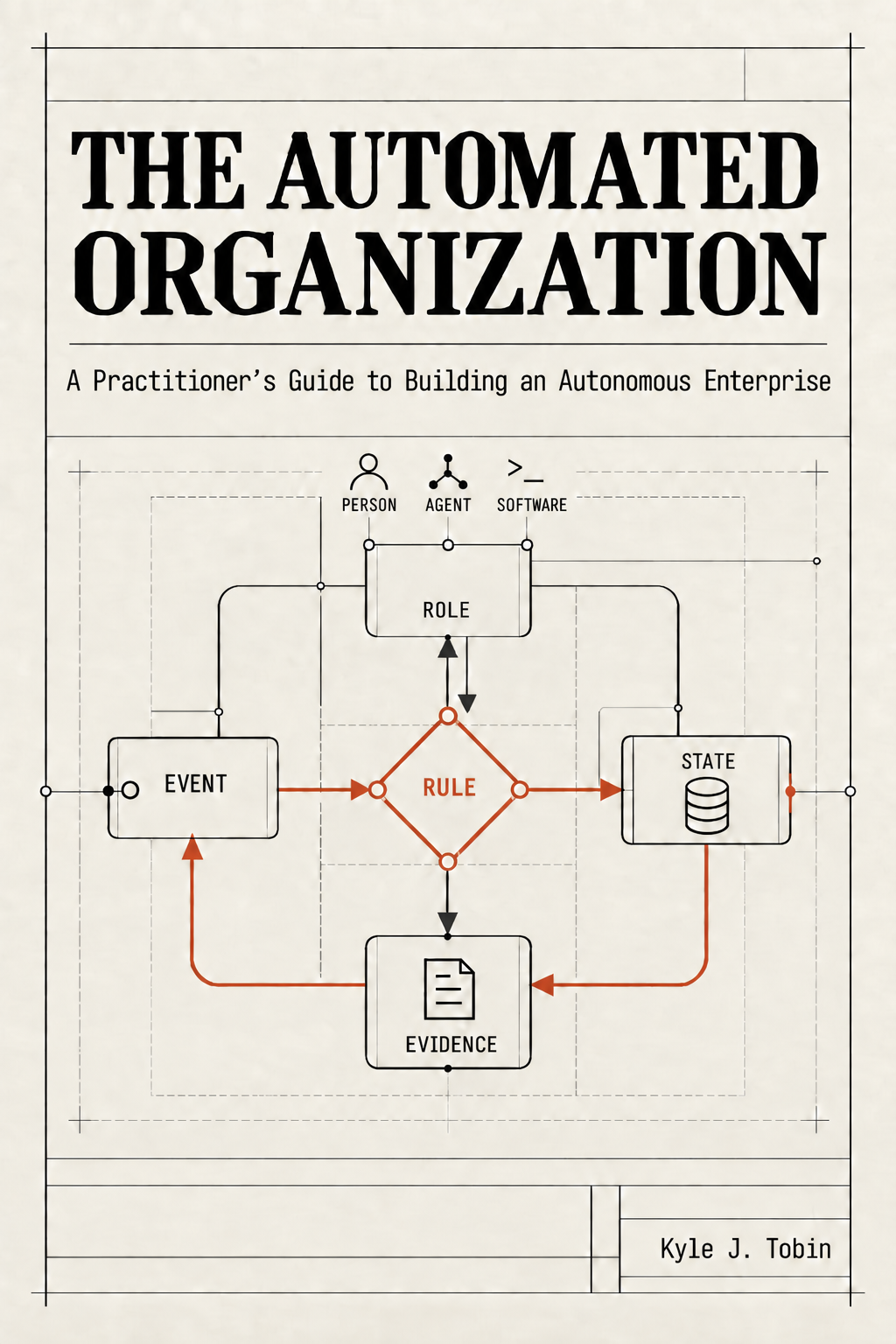
Book in progress 2026
Written in public, a chapter at a time.
Every organization runs twice: as its documents describe it, and as it actually works. An agent is handed the documents.
That difference is judgment your people supply unasked, and it can be found. Trace one case that mattered and ask the documents:
Every gap is knowledge your organization has never written down. The book is the method for finding all of it.
Systems that understand the business carry its cases from start to finish, exceptions included, and the people who know it best decide what it should become.

Kyle J. Tobin works on how organizations will now have to run: whole, explicit, and executable, from the authority at the top to the code underneath.
Correspondence contact@talco.dev